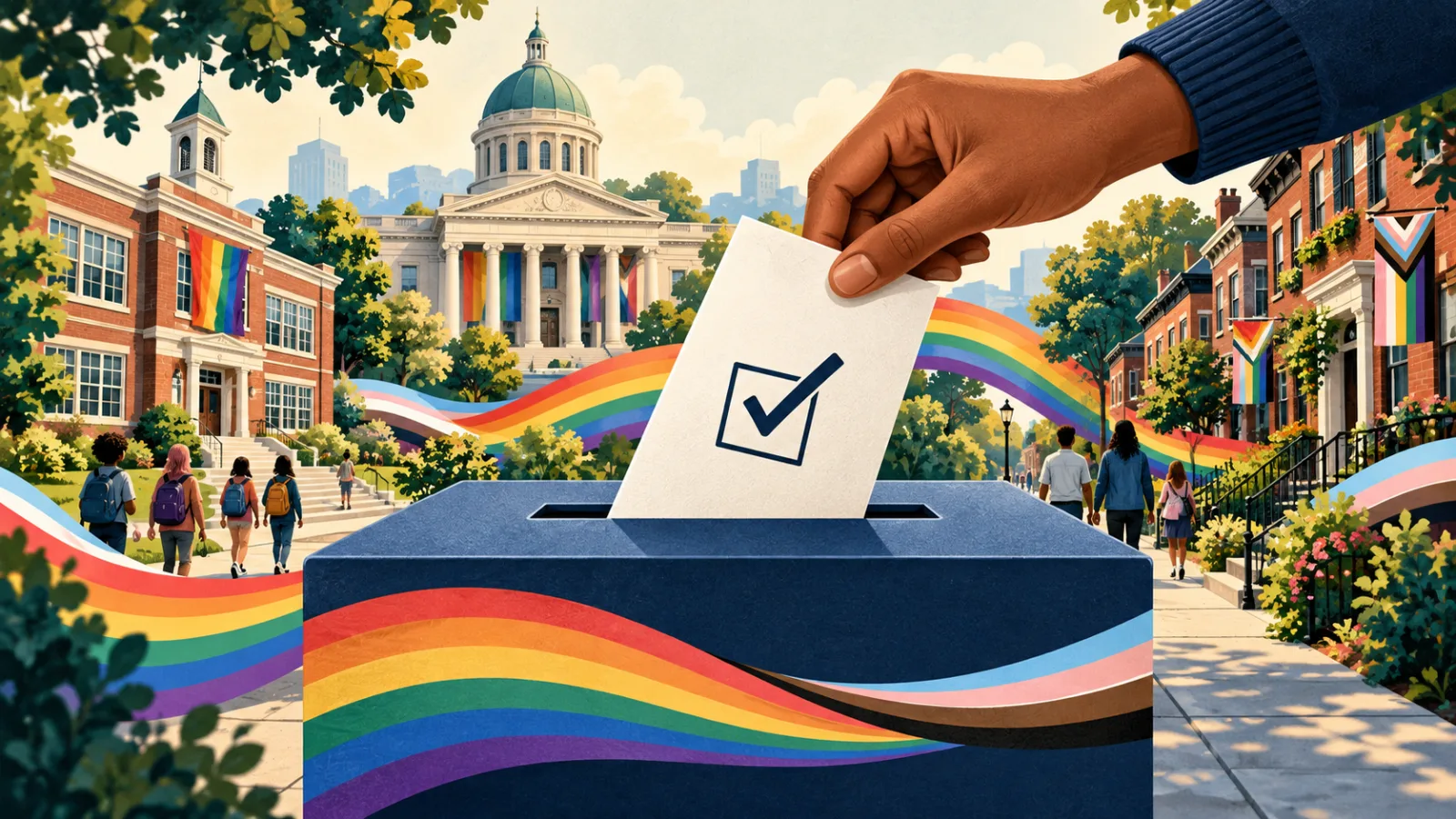
A ballot can feel like a small thing compared with the challenges facing the country. It takes only a few minutes to complete, and then it disappears into a voting machine or a sealed envelope. The consequences, however, can reach into workplaces, classrooms, doctors’ offices, courtrooms, and family homes.
That is why the connection between voting and LGBTQIA+ rights deserves attention. Elections help determine who writes laws, who carries them out, who controls public funding, and who selects many of the judges who interpret them.
Those responsibilities affect practical questions: What happens when someone faces discrimination at work? How does a school respond to bullying? Which services receive funding? What legal protections exist for a family?
Understanding these connections makes it easier to approach an election with purpose. It also helps explain why participation matters long after the presidential race leaves the headlines.
Rights Have a History, and Government Is Part of It
The history of LGBTQIA+ rights in the United States includes organizing, protest, litigation, public education, and legislative action. Progress came through many forms of participation, often working together.
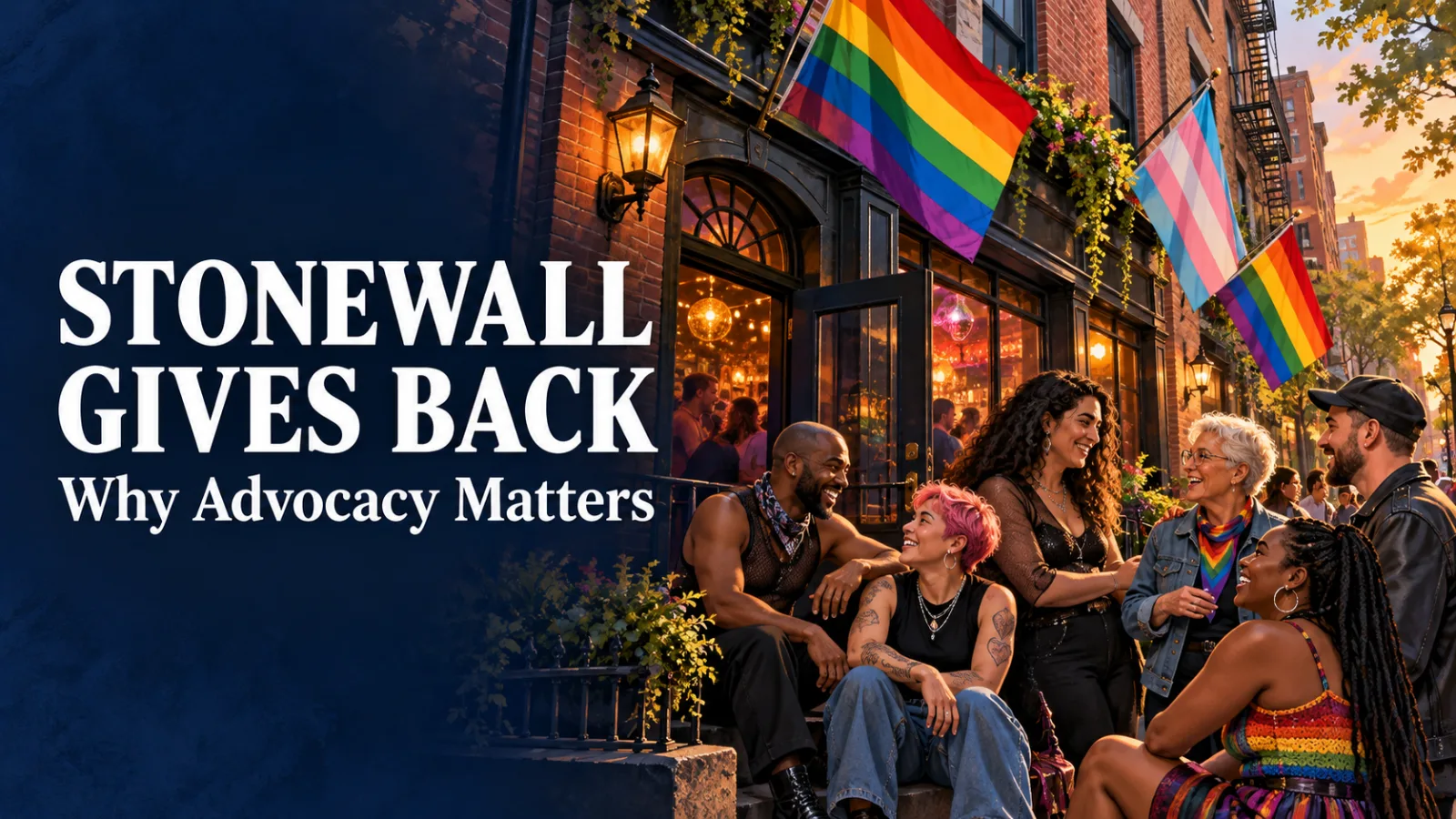
In New York City, the Stonewall uprising of 1969 became a major catalyst for the modern LGBTQ rights movement. The events at the Stonewall Inn and surrounding streets followed a police raid and helped energize a broader demand for dignity and civil rights. That struggle existed before Stonewall and continued long afterward.
That history matters because it shows how change happens. People identify an injustice, make it visible, organize around it, and push institutions to respond. Sometimes that response comes from a court. Sometimes it comes from lawmakers, public agencies, or local officials.
Voting is one part of that process. It determines who holds many of the positions with authority to respond.
A demonstration can bring attention to a problem. A lawsuit can challenge an unlawful policy. An election can change the officials responsible for deciding whether to address the problem, defend the policy, or propose something different.
Each tool has a role. A healthy democracy makes room for all of them.
What Happens at the Ballot Box Reaches Everyday Life
Political discussions often describe LGBTQIA+ rights in broad terms, such as equality, freedom, or inclusion. Those words carry more meaning when connected to ordinary experiences.
Consider an employee who believes they were fired because of their sexual orientation. Or a transgender applicant turned away from a rental. Or parents trying to understand whether their marriage will receive equal treatment.
These situations involve different laws and institutions. There is no single rule that resolves every question.
In Bostock v. Clayton County in 2020, the Supreme Court held that Title VII’s prohibition on employment discrimination because of sex includes discrimination based on sexual orientation or transgender status. The Equal Employment Opportunity Commission continues to identify those forms of discrimination as prohibited under Title VII.
That is an important protection. It is also a specific one: a ruling about a federal employment law does not automatically answer every question about housing, education, health care, or public services.
This is where understanding government becomes useful. Different offices control different decisions. An informed voter can look beyond a general promise of fairness and ask what a candidate would actually do within the powers of the office.
Marriage Equality Shows How Courts and Legislation Work Together
Marriage equality provides a clear example of how legal protections can come from more than one branch of government.
In 2015, the Supreme Court’s decision in Obergefell v. Hodges held that states must license marriages between two people of the same sex and recognize such marriages lawfully performed in another state.
Congress later passed the Respect for Marriage Act, signed into law in December 2022. It provides federal recognition for qualifying valid marriages and prohibits states from denying recognition to marriages from other states on specified grounds, including the sex of the spouses.
These protections have different legal foundations. The court decision addresses constitutional requirements. The legislation establishes statutory protections for marriage recognition.
The distinction matters. A headline about a court case, a proposed bill, and a law already in effect can sound similar while describing very different situations.
For voters, the lesson is practical: examine both legislative proposals and judicial responsibilities. Rights can be affected by the people who write statutes as well as by the institutions that interpret them.
State Elections Can Have Direct Consequences
National politics attracts enormous attention, but state government can have an immediate effect on daily life.
State lawmakers and governors make decisions involving education, health care regulation, civil rights protections, and public spending. Their authority operates within federal law and constitutional limits, but those limits still leave substantial room for policy choices.
The Supreme Court’s June 2025 decision in United States v. Skrmetti illustrates the connection. The Court upheld Tennessee’s restrictions on certain medical treatments for transgender minors against the equal protection challenge before it. The case concerned the state’s restrictions on puberty blockers and hormones for specified purposes.
The ruling did not require every state to adopt Tennessee’s policy. It demonstrated how a law enacted at the state level can have significant consequences and then become the subject of federal litigation.
That is an important reason to understand state races. Candidates for governor and the legislature can influence policies that may receive far less national attention than a presidential campaign.
Evaluating those candidates requires looking at actual proposals, voting records, and the authority of the office. A broad campaign statement offers less useful information than a clear explanation of what legislation a candidate would support or oppose.
Local Government Deserves a Closer Look
Local elections are often easier to overlook. Their effects can be close to home.
Depending on the jurisdiction, local officials influence public services, community funding, school policies, and the operation of local civil rights protections. School board responsibilities and selection methods vary, as do the powers of mayors, councils, and county governments.
New York City offers a concrete example of local protections. Its Human Rights Law prohibits discrimination based on actual or perceived sexual orientation or gender, including gender identity or expression and being intersex. The city identifies protections covering areas such as employment, housing, schools, and public spaces. The NYC Commission on Human Rights enforces and educates the public about the law.
That example shows why it helps to know what protections exist locally and which agency handles complaints.
It also raises useful questions for any community. Is information about services easy to find? Are public meetings accessible? Do officials explain how policies will work? Can residents find someone responsible for responding to a concern?
The answers help voters assess whether a candidate understands the work of governing, beyond the language of a campaign.
Judicial Appointments Can Outlast an Election Cycle
Some of the most lasting consequences of elections involve the courts.
Presidents nominate Supreme Court justices and other Article III federal judges, and the Senate considers those nominations. These judges generally hold office for life during good behavior, allowing their service to extend across multiple administrations.
That means presidential and Senate elections can influence the federal judiciary for decades.
Judges are expected to decide cases according to the law. Still, their approaches to constitutional interpretation, statutory language, and precedent can lead to different conclusions in difficult cases.
State judicial systems have their own selection rules. Depending on the state and court, judges may face elections, appointment processes, or retention votes.
A judicial race or nomination deserves careful attention to qualifications, professional conduct, legal reasoning, and respect for judicial independence. The consequences can reach well beyond the campaign season in which the decision occurs.
Look for Specifics Behind the Slogans
Campaign language is designed to be memorable. Governing requires detail.
When evaluating how a candidate might affect LGBTQIA+ rights, useful questions include:
- What has the candidate proposed or supported?
- What does their voting record show?
- Which decisions would the office actually allow them to make?
- How would a proposal affect existing legal protections?
- How would the proposal be funded and enforced?
- Does the candidate explain their position accurately and consistently?
These questions can be applied across parties and levels of government.
They also help distinguish a policy disagreement from an unsupported claim. A campaign advertisement may describe a sweeping threat or a sweeping solution without identifying the law involved.
Read the underlying proposal when possible. Check official voting records. Compare campaign statements with reliable reporting and primary documents.
Attention to detail is especially valuable when a proposal involves several legal concepts at once, such as civil rights, parental authority, religious liberty, or the powers of government. Understanding the actual text produces a more useful discussion than trading slogans.
Voting Matters, Even When the Choices Feel Imperfect
Disappointment with politics is understandable. Candidates may offer incomplete answers. Campaigns can become exhausting. Institutions can move slowly, and one election rarely resolves every concern.
Voting nevertheless remains a direct way for eligible citizens to participate in selecting public officials and deciding ballot questions.
Its influence is collective. One ballot joins others to determine who receives the authority to govern. That authority includes decisions about legislation, appointments, oversight, and public resources.
Participation also creates opportunities for accountability. A campaign promise can be compared with a later vote. A public statement can be measured against a budget proposal. An official can be asked to explain a decision.
It helps to approach voting with realistic expectations. Electing a candidate does not guarantee every preferred outcome. Government includes competing institutions, legal constraints, negotiations, and changing circumstances.
The value of participation is having a role in that process and continuing to examine what officials do with the responsibilities they receive.
Make an Informed Voting Plan
Practical preparation makes participation easier.
Start by checking registration status through an official election website. Confirm the address on file, review applicable deadlines, and find out which voting options are available.
The U.S. Election Assistance Commission explains that election administration is decentralized and identifies state and local election offices as the best sources for practical voting information. Rules and procedures vary by location.
A useful preparation list includes:
- Confirm registration information and any required updates.
- Review an official sample ballot, when available.
- Research the responsibilities of unfamiliar offices.
- Read ballot questions and official explanations.
- Confirm polling locations, voting hours, and applicable identification requirements.
- Check deadlines and instructions for any available early or mail voting option.
Vote.gov provides a starting point for state and territory registration information. Follow the instructions for the relevant jurisdiction rather than assuming a rule from another state applies.
Planning also leaves time to resolve questions directly with election officials.
Participation Continues After the Votes Are Counted
An election chooses officeholders. Public accountability continues throughout their terms.
Residents can follow legislation, attend public meetings, submit comments, contact representatives, and review public budgets. They can also listen to people affected by a proposal and compare those experiences with the claims made about it.
For discussions involving LGBTQIA+ rights, that means paying attention to specific circumstances rather than treating a diverse population as a single political talking point.
A workplace complaint, a school policy, and a family recognition question require different information. Careful public discussion makes space for those differences.
Community organizations, legal advocates, journalists, and public institutions each contribute to that understanding. Voting works alongside their efforts.
Understanding the Stakes Is Part of Citizenship
The connection between voting and LGBTQIA+ rights runs through the structure of government. Elections help determine who writes laws, allocates resources, administers programs, and participates in selecting judges.
Those choices can affect how people work, form families, obtain services, and seek protection from discrimination.
For anyone trying to understand the importance of voting, that connection makes the subject concrete. Decisions made in government become experiences in someone’s daily life.
Before the next election in your community, take time to learn what is on the ballot and what each office can do. Start with official election information, read beyond campaign slogans, and bring thoughtful questions to the conversation. An informed public gives democracy something it always needs: people paying attention.